Your Discord Polls Count “Yes” Votes That Cost Members Nothing
A worked example for testing member demand before you build, with a ladder of signals ranked by what each one costs and a go number set in advance.

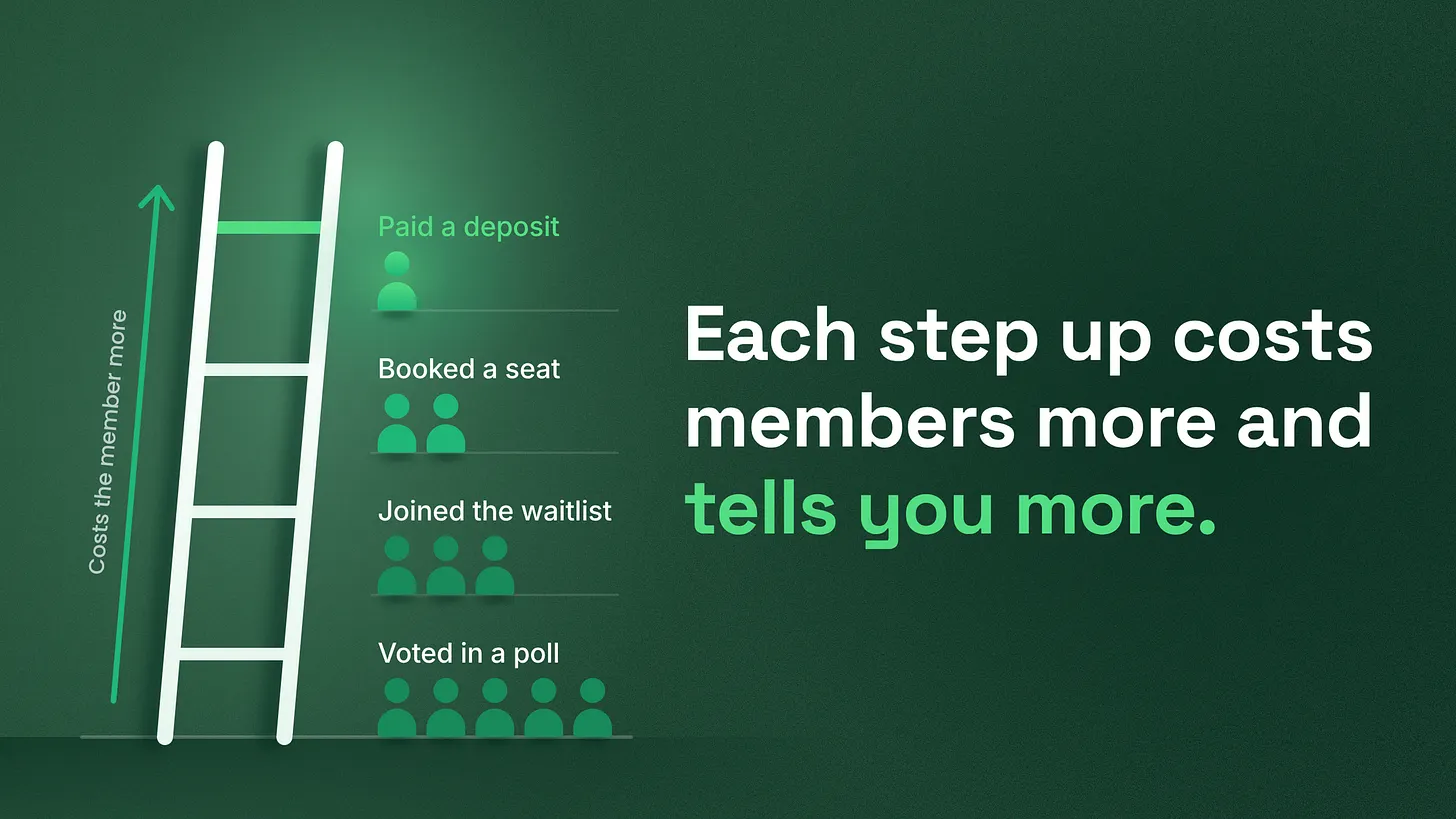
A yes vote in a Discord poll costs a member one tap, so a winning poll shows that an idea sounds good and stops short of who will pay, attend or post. Anyone working out how to validate demand with Discord polls needs a second step: ask the yes voters for something small that costs them, set the go number first, and build only on the count of people who took it.
Picture a software company asking its Discord server whether members would join a paid monthly workshop. The poll closes with a long yes bar, the team books a speaker and builds a sign-up page, and the first session opens to a handful of people. Nobody lied in that poll; it answered a cheaper question than the one the team needed answered. The fix is a second step. Treat the poll as a shortlist, then ask the people who voted yes to do one small thing that costs them something real: put an email on a waitlist, book a seat at a free first session, spend a few minutes on a short form, or place a refundable deposit. Decide before you ask how many people have to take that step for the idea to go ahead, and make the build decision on that count alone. The poll still has a job, which is ranking ideas against each other. The step decides which idea gets built. The workshop example below runs that sequence from the first poll to the final call, and the same sequence works for channels, events, feature requests and new communities.
Why a winning poll and an empty session can both be true
The distance between saying and doing is one of the better measured findings in psychology. A 2006 review of 47 experiments by Thomas Webb and Paschal Sheeran, published by the American Psychological Association in Psychological Bulletin, found that when an experiment moved people's intentions by a medium to large amount, their behaviour moved by only a small to medium amount. A 2016 review by Sheeran and Webb in Social and Personality Psychology Compass, published by Wiley, traced the gap mainly to one group: people who intend to act and then don't. A poll vote is an intention captured at its cheapest. The member is scrolling, sees a question about something pleasant, taps an answer and moves on. Nothing about the tap asks them to check their calendar, their budget, or the other communities already competing for their evenings. Yes is also the friendly answer. Discord's own Polls FAQ, checked October 2026, says there is no option to vote anonymously, so members vote in view of the team that runs the server, and a no can feel like a small snub to people they like. Then there is the question of who voted at all. A poll reaches the members who happened to open that channel while it was open, which tends to favour the most active people in the server. They are often the members who would back almost anything the team makes, so they are a weak guide to how the wider membership will respond. None of this makes polls useless. A poll is a fast, free way to compare ideas. It just can't carry a spending decision on its own.
A ladder of member signals, ranked by what each one costs
The useful question to ask about any signal is what it cost the member to give it. The more it costs, the more it tells you. Laid out from cheapest to most expensive, the signals a server can collect look like this:
| Signal | What it costs the member | What it can tell you |
|---|---|---|
| Poll vote or reaction | One tap | Which idea sounds most appealing |
| Interested on a scheduled event | One tap | Rough awareness of the event |
| Email on a waitlist | Their inbox | Who wants to hear when it opens |
| Three questions on a short form | A few minutes of thought | Who has the problem, and how badly |
| Booked seat at a first session | A slot in their calendar | Who is likely to turn up |
| First post in a test thread | Effort, in public | Who will actually take part |
| Refundable deposit or pre-order | Money, even if it comes back | Who will pay |
Two things follow from the table. A signal can only answer questions at its own price, so a one-tap signal can rank ideas and cannot tell you who will pay. And an Interested click on a Discord scheduled event belongs near the bottom, beside the poll vote, because it also costs a single tap. Treat it as awareness, and plan the room on bookings. The step you ask for should sit one or two rungs above the poll and match what you plan to build. A paid offer gets a deposit or a pre-order. An event series gets a booked seat at a free first session. A new channel gets a few members who agree to post in it during its first week. A product feature gets a short form asking how the member handles the problem today.
The workshop again, run the way it should have been
Back to the software company. Here is the same idea with the test built in from the start.
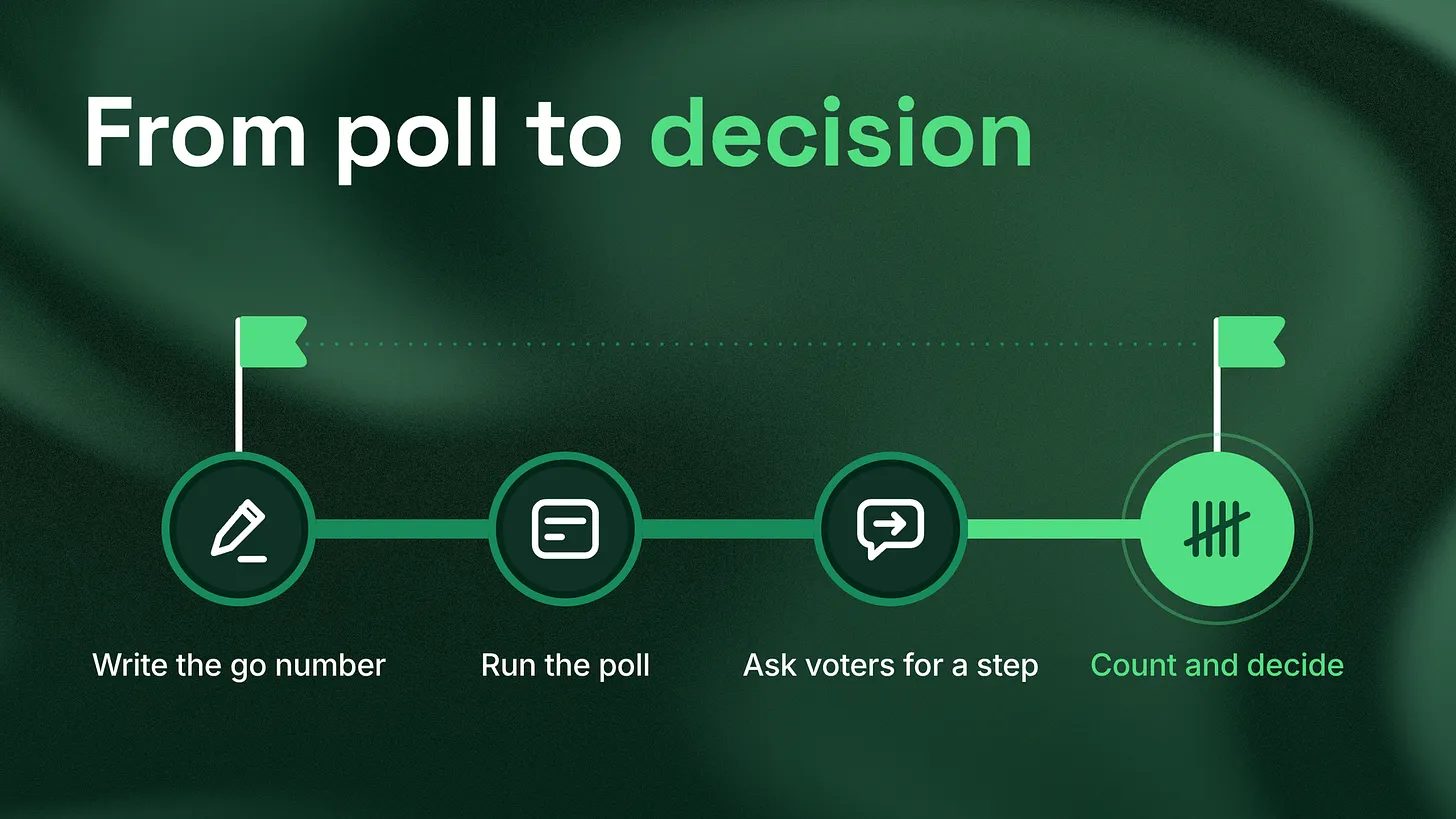
Write the decision down before the poll goes live. One sentence is enough: what you will build, and the count that makes it worth building. For the workshop, that could be the number of booked seats that covers the speaker's fee for a first session. Put the sentence where the team will see it later, such as a staff channel, so it carries a timestamp.
Run the poll as a shortlist with more than yes and no. Discord's Polls FAQ says a poll can hold up to ten answers and stay open for 1 hour, 4 hours, 8 hours, 24 hours, 3 days or 1 week. Offer three or four workshop topics instead of one yes or no question, and leave it open for 3 days or the full week so members who only check in at the weekend get a say. The winner tells you which topic to test, and nothing more yet.
Ask the yes voters for the step, in the open. Reply under the poll once it closes. Thank people, name the winning topic, and link a booking page for a free first session with a deadline that shows the date, the time and the time zone. Post one reminder before the deadline. A cold direct message to every voter tends to read as a sales push, while a public reply also lets members who missed the poll take the step.
Count, then make one of three calls. When the deadline passes, compare the bookings with the number you wrote down.
If the count clears the number, build it. If it falls short but the people who booked are exactly who the workshop is for, build a smaller version. If almost nobody booked, drop the idea and say so in the server.
The middle outcome is where a team can lose the most money, because a short count feels like a near miss and the pull is to launch at full size anyway. Building smaller means one pilot session, a waitlist for the second, and a fresh count afterwards.
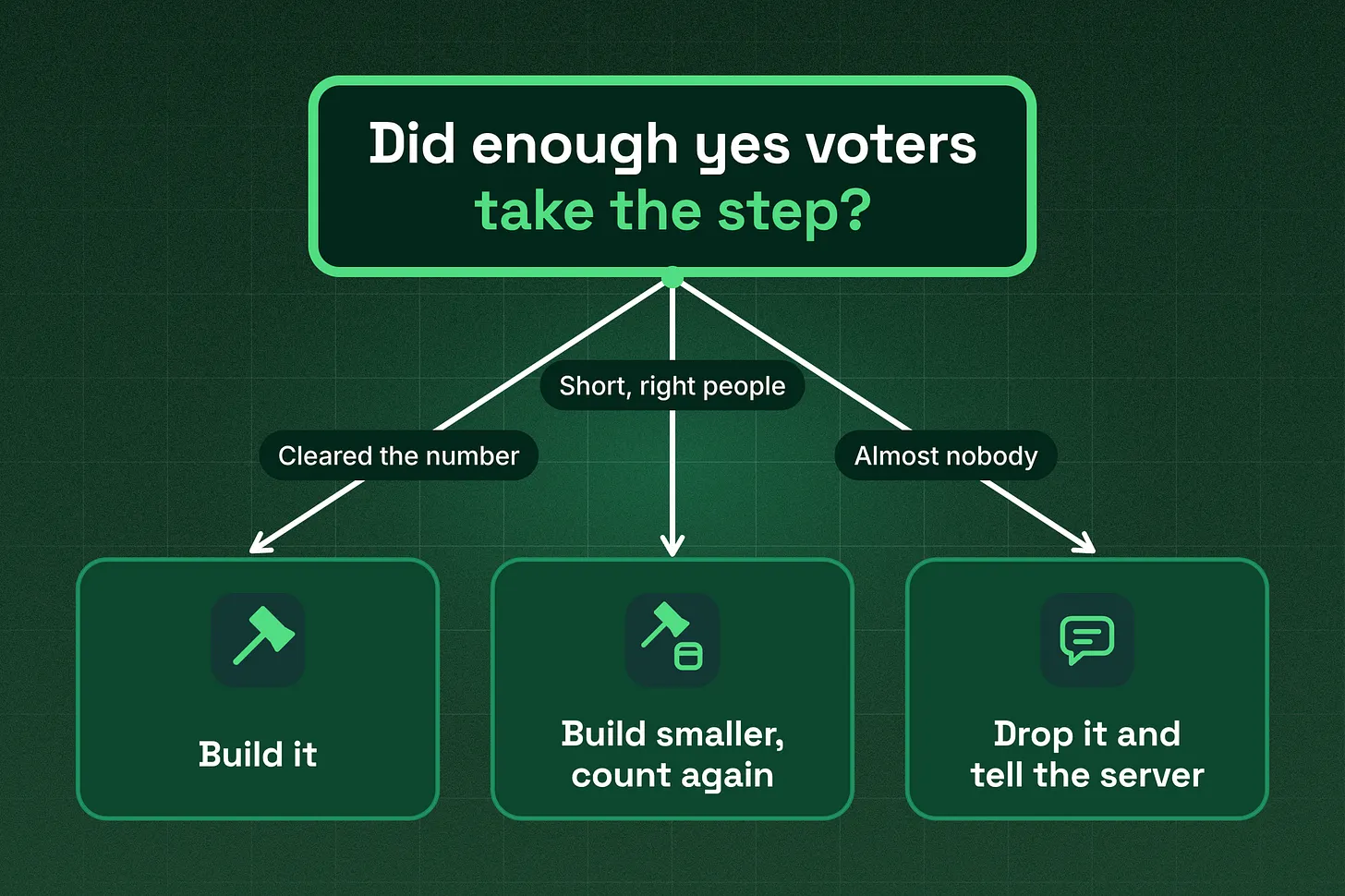 The third outcome deserves a post of its own. Members who voted want to know what happened to their vote. A short note saying the idea did not reach the number, and naming what the team will test next, keeps the next poll worth answering.
The same trap outside paid offers
Paid workshops make the gap easy to see because money is involved, but the pattern holds anywhere a team builds on a vote. Channels are the everyday case. A server votes for a new channel, the team opens it, and it goes quiet within a fortnight. A better test is to open the topic as a thread first and ask a few members to agree to post there during its first week. If the thread stays busy, it has earned a channel. Events behave the same way. An Interested click is a poll vote with a date attached. Ask for a booking against a fixed number of seats, or ask members to say in a thread what they want from the session, and plan around those answers. Product requests sit on the same ladder. A thumbs up on a feature request is cheap. Ask the members who reacted to fill in a three-question form about how they handle the problem today, and you learn who has the problem and how badly, which a reaction count can't tell you. A brand starting a community from nothing faces the same choice one level up. Asking customers whether they would join a Discord server gets a polite yes. A waitlist for the server's opening week, or a first invite sent to a small group who agree to introduce themselves, shows who will actually arrive. For a community that already exists, the riskiest polls are about anything sold with the brand's name on it. A vote like that measures goodwill toward the team. Whether the product is worth buying for its own sake is a separate question, and only a pre-order or a deposit answers it.
What a small, honest count gives the product team
A short count is still a result, and often a more useful one than a big vote. The people who took the step are named members with the problem you want to solve. They make a ready pilot group, the first people to ask for feedback, and the members most likely to tell others when the thing ships. I have passed member feedback on to a product team. A short list of members who already took a step is stronger evidence to bring into that room than a screenshot of a poll, because each name on it stands for a decision someone made. This test is one piece of a bigger member feedback system: how requests come into the server, how they get sorted by who can act on them, how the promising ones get tested before anyone builds, and how the result gets reported back to the members who asked. A server with only the first piece collects votes. A server with all four can tell its product team what members will actually use.
You can now turn any poll into a decision your team can defend. The pieces on either side of it decide how well it works: how member requests reach you in the first place, and what happens once the thing you tested ships. How to Triage Member Feedback in Discord: Sort by Who Can Fix It, Report Back Weekly covers sorting requests by who can act on them and reporting back every week, and How to Prepare a Discord Community for a Product Launch: Answer the Questions Before Launch Day picks up from the build decision. If you want to know how your own server handles feedback today, the Free Analysis is a 3 minute form, and within 24 hours I'll tell you what's working, what isn't, and what to fix first. And if you would like these testing and reporting habits written into a playbook for your team, or the server run day to day with monthly reports, Community Management Pro covers strategy consulting and full community management.
*Polls are good at telling you what your members like. Let the people who took a step tell you what to build next. More on running a Discord community this way at *Link