An Exclusive Drop Without a Record of Who Showed Up Is Just a Sale
Scarcity and limited releases promise belonging. They only deliver it when the community keeps a lasting memory of who was there.

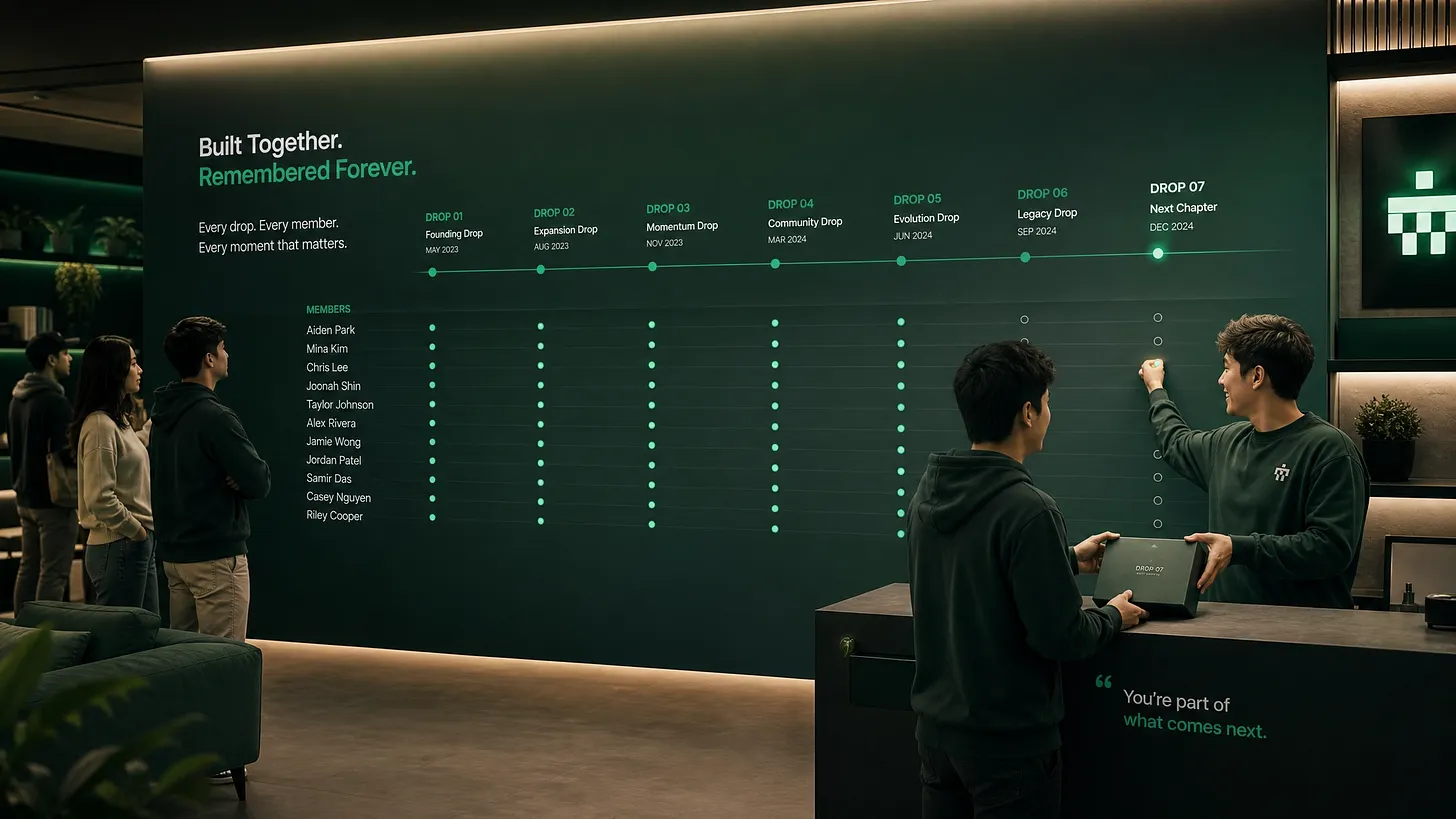
Limited drops sell belonging, but belonging only exists if the community remembers who was there. Hand over a collectible and record nothing and you have made a sale, not a legacy. Build the infrastructure that marks presence, makes it visible, and lets it accumulate, so scarcity turns into membership instead of a transaction.
The pitch that sells a feeling
I listened back to a pitch for an exclusive collectibles club, and the language was pure belonging. Members only drops. Limited pieces. Nothing ever re released. Once a drop is gone, it lives only in the hands of the people who believed early enough to be there. Owning a piece was framed as becoming something, a keeper of the story, a person who showed up before the crowd did. It is a compelling pitch, and the emotional promise underneath it is the real product. People are not paying for an object. They are paying to belong to a moment and to have that belonging mean something later. The trouble is that most communities running this model deliver the object and quietly fail to deliver the belonging, which turns the whole thing back into an ordinary sale wearing better words.
Scarcity is a feeling, and feelings need memory
A limited drop works on a simple emotional mechanism. Being one of the few who has the thing feels good because it marks you as early, committed, or in the know. That feeling is entirely relational. It only exists in reference to other people, the ones who were not there, the ones who came later, the ones who can see that you were present when it counted. Here is what that means in practice. The feeling depends on memory. If nobody remembers who was there, being there stops signifying anything. A drop that leaves no trace in the community gives the member a private object and takes away the social meaning that made the object worth chasing. You sold scarcity and then erased the only thing that made scarcity valuable.
The moment most communities lose the plot
Watch how a typical exclusive drop actually runs. There is a build up, a burst of urgency, a flurry of purchases, and then it ends. The limited pieces are gone. And after that, nothing. The community moves on to the next thing, and the drop that was supposed to be a defining moment becomes a transaction that happened once and left no mark. The member is left holding an item and a fading memory. The community holds no record at all. A month later there is no way to see who was part of that first drop, no place where it is commemorated, no accumulated status for having been early. The emotional promise had a shelf life of about a day, and once it expired, the member is left wondering why this felt different from buying anything else. It did not, in the end.
What the memory infrastructure looks like
The thing that turns a drop into belonging is the record around it, and that record is infrastructure you have to build deliberately. It starts with a marker that persists. Some visible sign, attached to the member, that says they were present for that specific drop. It continues with visibility, a place where the community can see who showed up early, because status that nobody can see is not status. It culminates in accumulation. A member history that grows over time, so that being there for the first drop still counts on the day of the twentieth. When these pieces exist, a drop stops being an isolated event and becomes an entry in an ongoing story. The member can point to their marker. Others can see it. Newer members can understand that some people were here before them, and that being early was real. That is what belonging is made of, and none of it happens by accident.
Why this is a systems problem, not a marketing one
Communities tend to treat drops as a marketing activity. Build hype, create urgency, sell out, repeat. And the marketing is often excellent, which is exactly why the failure is so easy to miss. The drops sell. The numbers look fine. The problem does not show up in a single campaign. It shows up in the slow realization that the community has no accumulated meaning, that every drop resets to zero, and that members are not building anything by staying. The fix lives in operations, not copy. You need the systems that record presence, display it, and let it accumulate. Without them you are running a store with a countdown timer, and no amount of legacy language changes what that actually is. With them, each drop deepens a member's investment in the community rather than just emptying their wallet for an afternoon.