The Platform Your Community Lives On Is a Positioning Decision
Before a client evaluates your content, your support, or your programming, they evaluate the environment. The platform is part of the signal.

The Environment Is Part of the Offer
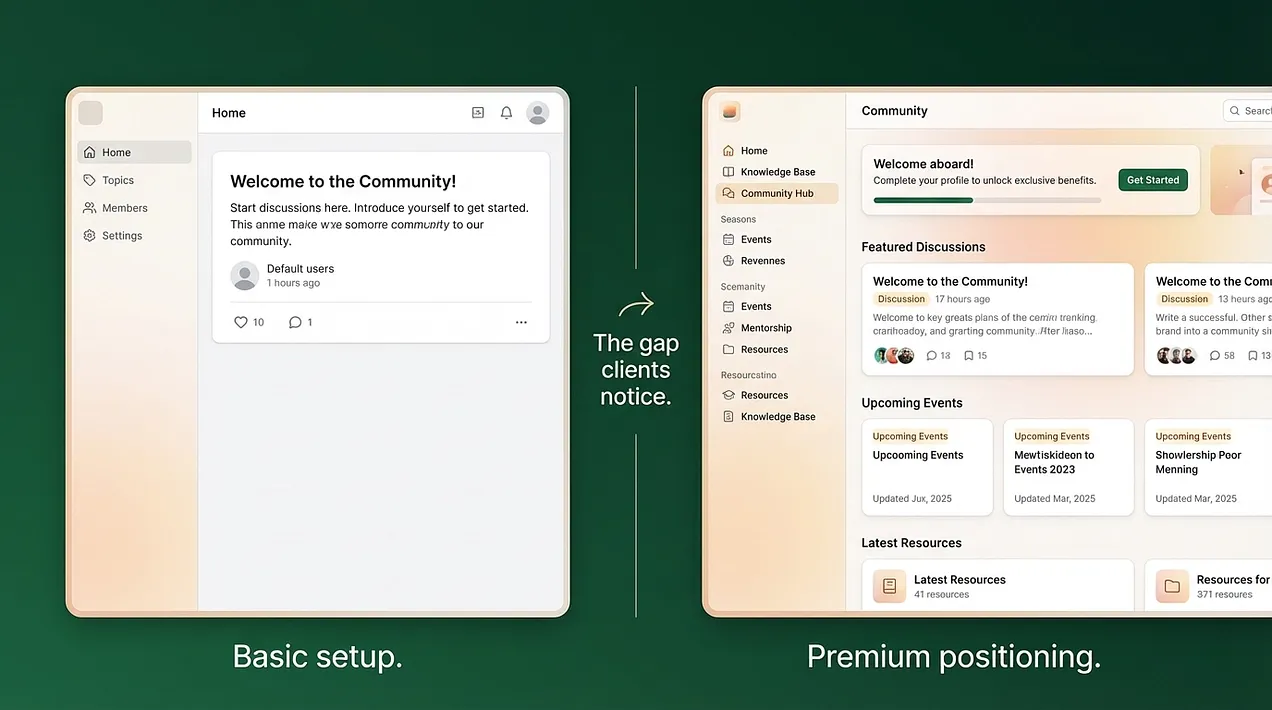
There is a conversation that happens frequently in communities built for high-value clients, and it almost never happens explicitly. A new member joins, looks around at the space, and in the first few minutes forms an impression of what they have paid for. They do not say this out loud. They do not write a review about the platform choice. But the impression is real and it shapes everything that follows. A well-designed community environment, structured navigation, clear onboarding, a sense that the space was built intentionally, signals to that member that their investment was taken seriously. A generic setup with default templates and no visible design decisions signals the opposite. The platform a community is built on is part of this signal. Not the only part. But a meaningful one.
What High-Ticket Clients Notice
The majority of clients operating communities at the higher end of the market, programs and offers priced well above the entry-level range, are not first-time community members. They have been in basic platforms. They have joined group chats that were set up quickly and never maintained. They have paid for access to communities that turned out to be minimal setups with little design. When they join a new community at a high-ticket price point, they arrive with a reference frame. They are comparing the experience to everything they have joined before. And the platform is one of the first things they evaluate. Premium platforms designed specifically for high-value communities signal a specific kind of seriousness. The navigation is structured. The member experience has been thought through. The onboarding feels designed rather than assembled. The visual environment communicates that the person running it made deliberate choices. This matters before a single piece of content is consumed. Before the first coaching call, the first community post, the first resource is opened. The platform creates a first impression that either supports or undermines the pricing.
Platform Choice as a Business Decision
Most conversations about platform selection focus on features: what tools are available, what the pricing structure looks like, what integrations exist. These are real considerations. But platform choice is also a positioning decision, and that dimension often gets less attention than it deserves. A free platform with limited customization options communicates accessibility. That is the appropriate signal for a community designed to reach a broad audience at low or no cost. But if the offer being sold alongside that community is positioned as premium, the mismatch between the price point and the environment creates friction. The client paid for something that feels high-value. The platform they are entering feels like the free tier. The inverse also exists. Organizations that invest in premium platform environments often find that the clients they attract are self-selected for seriousness. People who are looking for a casual, low-commitment community experience tend not to pay the rates required to enter a highly designed, structured environment. The platform acts as a filter before the offer is fully evaluated. The community platforms designed specifically for high-touch, high-value communities charge for that positioning. That cost is not just a software expense. It is part of what the client is experiencing when they join.
The Setup Investment
One of the objections to premium platform selection is cost, both the direct cost of the platform and the time investment required to set it up well. Basic platforms are cheaper and faster to deploy. This is true. But it is worth evaluating the cost in context. A community that processes high-ticket clients is generating significant revenue per member. The difference in setup cost between a basic platform and a premium one, when calculated per client, is often small relative to the revenue each client represents. And the impression difference, the signal about seriousness and investment, is not small. Setup quality also matters. A premium platform set up poorly still communicates something, just not what was intended. The tool provides the capability for a well-designed environment, but the design still has to be done. This is where working with someone who understands community infrastructure specifically becomes valuable. The platform is the raw material. The setup is the craft.
What the Market Is Saying
The patterns emerging from conversations with platform founders and community operators consistently point in the same direction. The communities running offers at the highest price points are not using the cheapest or most generic platforms. They are investing in environments that match their pricing. This is not because expensive platforms make offers more valuable on their own. It is because the full experience of a high-ticket community includes the environment the client enters, the onboarding they receive, and the design of the space where they will spend time over the course of their membership. That experience is a product decision. And like any product decision, it either reinforces the value of what was purchased or it quietly works against it. Platform choice is positioning. The clients who are paying the most have the best frame of reference for what a well-positioned community environment feels like. They notice it when it is there. And they notice when it is not.
Daniel Jeong consults on Discord community infrastructure and operational systems for organizations building long-term community engagement strategies. https://danieljeong.org