Discord Is No Longer Just for Gamers. That Changes How You Build.
The demographic shift on Discord over the past several years, and why the community infrastructure that served gaming audiences requires significant rethinking for professional audiences.

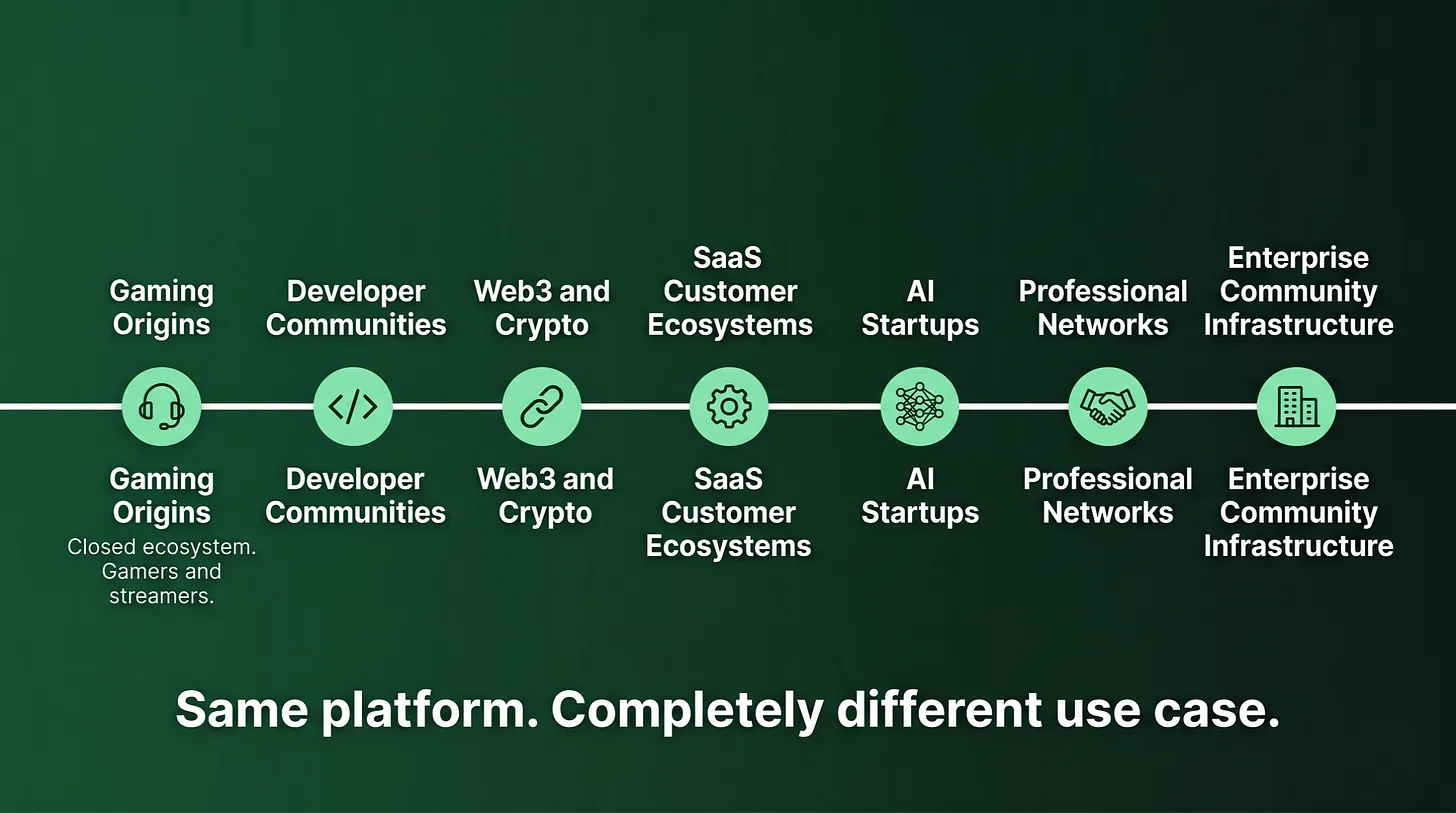
The Outdated Mental Model
When founders and executives encounter the suggestion that they should build their community on Discord, a predictable reaction surfaces. They associate the platform with gaming. They picture servers full of teenagers coordinating video game matches. They assume the platform culture, the typical user, and the design language all reflect that origin. This mental model was accurate several years ago. It is no longer an accurate picture of where Discord actually sits in the broader technology and community landscape. And operating from an outdated mental model produces outdated strategy.
Where the User Base Actually Sits
The gaming community that established Discord as a platform introduced several features that turned out to be extraordinarily useful far beyond gaming contexts: sophisticated role and permission systems, channel organization by topic and access level, bot automation infrastructure, high-quality voice and video, and a moderation toolkit designed for managing large groups of people with different levels of trust. These features, built for gaming communities, turned out to be exactly what AI startups, SaaS companies, Web3 projects, creator platforms, and professional networks needed to build serious community infrastructure. As those use cases grew, the user demographics expanded significantly. The demographic range that community operators are working with on Discord today is meaningfully different from the gaming-era profile. Professional users, technical founders, developers, investors, and operators are now a substantial part of the active user base on the platform. Companies with millions in annual recurring revenue are running their strategic customer communities on Discord. AI companies are coordinating developer ecosystems there. The platform has grown into serious professional territory without abandoning its original user base.
Why This Changes the Infrastructure Requirements
Building a community for a professional or technical audience on Discord requires different infrastructure choices than building for a gaming audience. Channel architecture for professional communities needs to reflect the way a sophisticated user thinks about navigating information. A gaming server can afford some navigational ambiguity because members are highly engaged and motivated to find what they need. A professional community member, often checking in between other demands on their attention, will leave a confusing server rather than investing time figuring out how it works. Onboarding flows for professional audiences need to respect their time and intelligence. A lengthy verification process that made sense for a gaming server where members were willing to invest time may feel like friction to a professional evaluating whether the community is worth their attention. The first five minutes of the onboarding experience need to communicate value clearly and quickly. Moderation for professional communities involves different challenges than moderation for gaming servers. The behavioral problems are different. Spam and rule violations in gaming contexts are often obvious. Professional communities deal with more nuanced situations: subtle self-promotion, off-topic business solicitation, aggressive disagreement between members who are sophisticated enough to be hard to manage directly. The moderation infrastructure and the judgment required to deploy it need to be calibrated for the specific community context. Programming for professional audiences needs to deliver genuine strategic value. Events that teach skills, provide access to expertise, or facilitate meaningful professional connections. Not entertainment for its own sake but programming that makes members better at something they care about professionally.
The Infrastructure That Transfers
Not everything changes when you move from gaming-era community models to professional community infrastructure. Several foundational principles remain consistent regardless of audience. Onboarding remains the highest-leverage intervention in any community. The first experience a new member has determines whether they will become an active member or a dormant account. This is as true for professional communities as it is for gaming communities. Moderation quality determines culture at scale. A server that lets behavioral problems go unaddressed long enough will develop a culture that reflects those problems. Professional communities are not immune to this. If anything, the stakes are higher because professional members have a lower tolerance for low-quality environments. Consistent programming is still the foundation of sustained engagement. Professional communities also go through natural quiet periods. Structured calendars that provide ongoing reasons to return work for professional audiences for the same reasons they work for any audience. The fundamental infrastructure principles hold. The specific implementation needs to be calibrated for who you are actually building for.
The Opportunity for Brands That Recognize the Shift
Most brands still approaching Discord with a gaming-era mental model are leaving significant infrastructure opportunity on the table. They build servers that look like they were designed for gaming audiences because that is the template they are working from. Then they wonder why their professional or technical audience does not engage in the way they hoped. The brands that have recognized the demographic shift and built infrastructure calibrated for the audience that is actually on the platform today are building communities that drive real business outcomes. Retention systems that extend customer lifetime value. Support ecosystems that reduce ticket volume. Developer communities that accelerate product adoption. Investor communities that deepen brand trust. The platform that exists today is not the platform that most people's mental model of Discord reflects. Understanding the gap between the outdated perception and the current reality is the starting point for building community infrastructure that actually serves the professional audiences now using the platform.
The Practical Implication
If you are building or planning to build a community on Discord, the first question is not about the platform. It is about your audience. Who are they specifically? What do they need from a community experience? What does their relationship with time, attention, and professional value look like? The answers to those questions determine the infrastructure design. Not the assumption that Discord is for gamers. Not the assumption that Discord is a plug-and-play solution. The specific reality of your specific audience, and the infrastructure that best serves their actual needs. The platform has grown into a general-purpose community infrastructure layer that serves an enormous range of audiences and use cases. Building for that platform today means building for the audience that is actually on it, not the audience that was on it five years ago.
Daniel Jeong designs Discord community infrastructure for SaaS companies, AI startups, and high-growth brands. For consulting inquiries, visit danieljeong.org.